
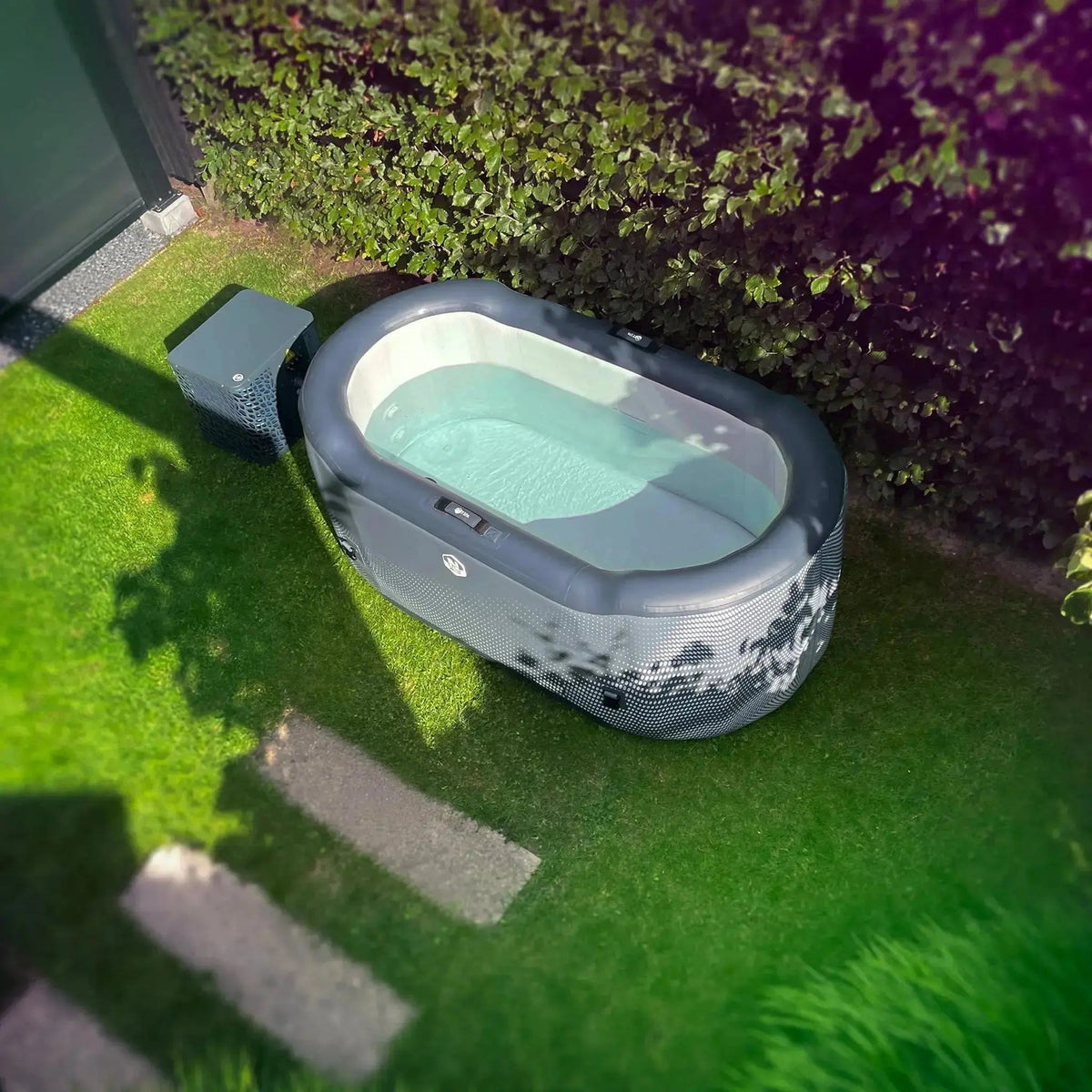
Short answer: an ice bath can help reduce perceived muscle soreness after heavy exertion. Cold water immersion can be pleasant especially after intensive endurance training, competitions or demanding training weeks. It is just no guarantee of faster recovery, and timing around strength training calls for nuance.
Want to read more broadly about use in sport? Then see ice bath after exercise. Want to compare a home solution straight away? Then go to ice bath with chiller.
Why do athletes use an ice bath for muscle soreness?
After intensive exertion, muscle soreness or fatigue often follows. An ice bath is then used as a recovery stimulus. The cold can feel temporarily numbing and many users find that their legs or muscles feel fresher afterwards.
Research into cold water immersion shows that people sometimes report less muscle soreness after exertion. That makes an ice bath interesting as part of your recovery routine, certainly when you want to train or move again while feeling fresh.
What does research say about muscle soreness?
The conclusion is nuanced. There is research pointing to less perceived muscle soreness after cold water immersion, but the effect differs per person, sport, temperature, duration and timing. Feeling less muscle soreness also does not automatically mean that all recovery processes run faster.
That is why we prefer to talk about how recovery feels and about perceived muscle soreness rather than about guaranteed faster recovery.
When does an ice bath make sense?
- After heavy endurance training: for example running, cycling or team sport.
- After a competition: when feeling fresh matters more than training adaptation.
- During busy training weeks: when fatigue is building up.
- On warm days: when cooling down after exertion is pleasant.
If you train mainly for muscle growth or maximum strength, be more critical about immediate cold exposure after strength training. For that, read the sport guide.
How long in an ice bath for muscle soreness?
For many home users 5 to 10 minutes is already long enough, but beginners are better off starting shorter. Begin with 1 to 2 minutes and build up gently. The temperature does not have to be extremely low; 10 to 15 degrees can already feel clearly cold.
Use how long in an ice bath and ice bath temperature for a safe build-up.
Ice bath with ice cubes or a chiller?
For a one-off recovery attempt, ice cubes are enough. For athletes and home users who train more often, a chiller is more practical. You need to plan less, the temperature is more stable and you can repeat your sessions more easily.
Read ice bath with chiller vs ice cubes or go straight to the ICEO Recovery Bath PRO.
Make your recovery routine complete
An ice bath works best as part of a broader routine. Think of sleep, nutrition, a calm cool-down, mobility and enough recovery time. Cold training is a tool, not a replacement for the basics.
Want to start seriously at home? Then take a look at all ice baths and read how to keep ice bath water clean.
Safety
Do not get into an ice bath if you have any medical doubt without consulting a doctor. Be extra careful with cardiac complaints, high blood pressure, arrhythmia, pregnancy, epilepsy, breathing problems or poor circulation.
Stop straight away in case of dizziness, chest pain, breathlessness, confusion or numbness. Keep your head above water and build up gently.
Conclusion
An ice bath can be useful against perceived muscle soreness after heavy exertion, especially if you dose the session well. Most of the gain lies in repeatability: a temperature you can control, clean water and a routine you keep up.
Frequently asked questions
Does an ice bath help against muscle soreness?
It can reduce perceived muscle soreness, but it is no guarantee and effects differ per person.
When do you take an ice bath after exercise?
Often after intensive endurance training or competitions. With strength training, timing depends on your goal.
Which temperature helps with muscle soreness?
As a home user, start around 10 to 15 degrees rather than extremely cold. Control and calm matter more than the lowest temperature.
Which ice bath suits athletes at home?
For regular use an ice bath with chiller is practical, because you have better control over temperature and planning.
Share:
IJsbad voordelen: dit levert koud water op
Hoe gezond is een nieuwjaarsduik eigenlijk? Wetenschap vs. ervaring